
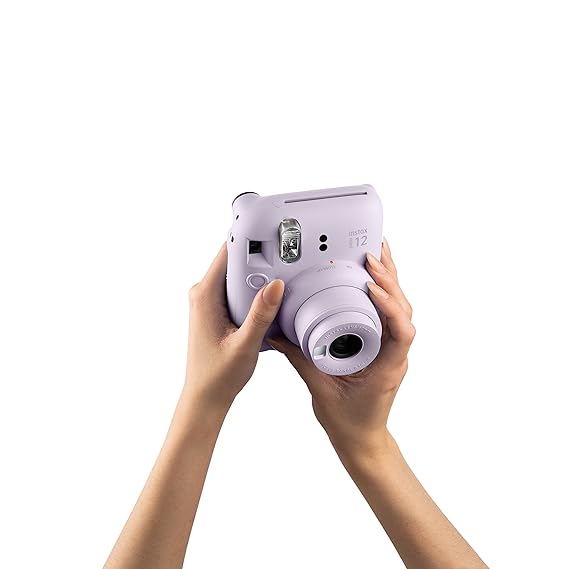
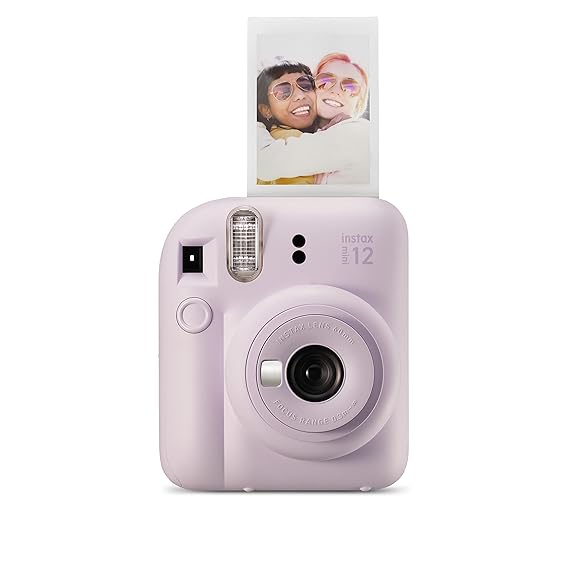
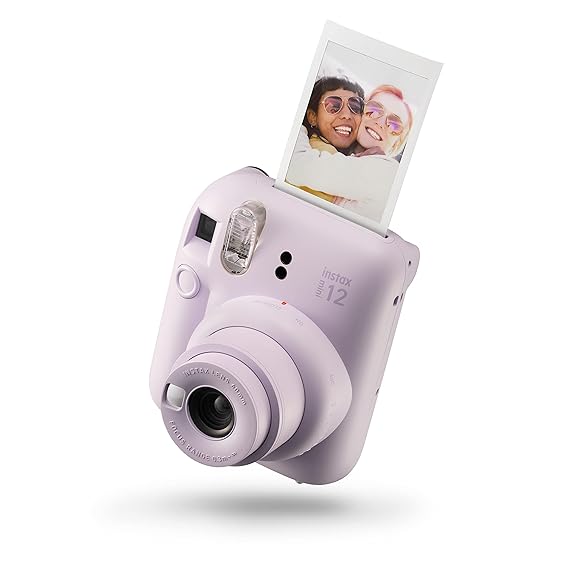
Take bright photos no matter where and when!
Easy to use for the perfect close-up
9499 ₹ Original price was: 9499 ₹.7499 ₹Current price is: 7499 ₹.
Take bright photos no matter where and when!
Easy to use for the perfect close-up
Colour options include Lilac Purple (also listed just “Purple”). Amazon+2Amazon India+2
It has a builtin selfie mirror and a close‑up mode (for near shots), plus parallax correction when using close‑up. Amazon+1
Automatic exposure and automatic flash control. Amazon+2The Reliable Store+2
Requires 2 × AA batteries. Amazon+1
Uses Instax Mini film (so compatible with Instax Mini 11, Mini 9 etc.). Amazon+1
Here are some current offers / listings:
| Seller | What you get | Price* |
|---|---|---|
| Flipkart (camera only, purple) | Just the camera | ~ ₹7,499 (special price) Flipkart |
| Blinkit | Camera‑only variant | ~ ₹7,499 Blinkit |
| Amazon India | Lilac Purple camera | ~ ₹8,999 Amazon India |
| Amazon “Happiness Box” (40 shots + extras) | Camera + 40 film shots etc. | ~ ₹8,999 Amazon India |
*Prices subject to change, may depend on stock, location, offers, etc.
Here are some bundle deals and more complete kits if you want extras (film, case, albums etc.):


Here are highlights:
Instax Mini 12 + Twin Pack Film + Pouch (Lilac Purple) – good if you want film and a pouch included.
Mini 12 + 20 Shots + Case & Extras Bundle – more accessories: case, possibly stickers, stand etc.
Camera + 10×2 Film Pack – heavier film pack so more shots ready.
Bundle: Film + PU Case + Album + Selfie Lens – best if you want a full “kit”.
If you like, I can check what the best deal locally in Sangrur / Punjab is (delivery cost + stock) for the Lilac Purple version. Do you want me to do that?
Here’s a detailed description of the Fujifilm Instax Mini 12 Instant Camera — Purple (Lilac Purple) — its features, design philosophy, strengths, limitations, and how it compares to similar instant cameras. If you want, I can also write a version targeted for a product listing, or simplify it.
The Instax Mini 12 is Fujifilm’s modern take on a simple, fun instant camera in the Instax Mini series. It builds on the Mini 11 by adding a few refinements, most notably better framing accuracy (parallax correction for close‑ups) and a slightly improved design, while keeping the user experience very easy and intuitive. The Lilac Purple version brings a soft pastel aesthetic that appeals especially to younger users, people who like cute or colorful accessories, scrapbookers, and those wanting a camera that’s as much about style as capturing memories.
Colour & Style: The Lilac Purple (sometimes called “Purple” or “Lilac”) finish is pastel, soft but vibrant—enough to stand out, yet gentle enough to match many outfits or décor. It comes in Fujifilm’s line with other pastel options (mint green, pastel blue, blossom pink, clay white), so it’s part of a trend toward playful, lifestyle‑oriented instant cameras. instax.com+2Gizmochina+2
Build & Size: The body is plastic, like most Instax Minis, with smooth curves. It’s fairly compact for the kind of camera it is, though not pocket‑tiny. The dimensions are approximately 104 mm × 66.6 mm × 122 mm. instax.com+2alinelk.com+2
Weight: About 306 grams (excluding film, strap, and batteries). So it’s light enough to carry around in a bag or sling, but you’ll feel the weight if you carry it all day. instax.com+1
User Interface & Controls: Very minimal. There’s a shutter button, a lens ring that’s also used to switch to Close‑Up mode, and a small selfie mirror near the lens. No complex menus or digital screens. It’s meant to be plug‑and‑play. instax.com+2Accelerator+2
Here are the main technical details, which help understand what the Mini 12 can and can’t do:
| Specification | Details |
|---|---|
| Film Type | Fujifilm Instax Mini Instant Film (sold separately). The print size per photo is 62 mm × 46 mm. Fujifilm+2alinelk.com+2 |
| Lens | 2 components, 2 elements, focal length = 60 mm, aperture approx f/12.7. instax.com+2alinelk.com+2 |
| Shooting Range / Focus / Close‑ups | Works from about 0.3 meters and beyond. If you twist the lens to select Close‑Up mode, you can shoot between 0.3 m and 0.5 m distances, which is great for portraits, small objects, or selfies. instax.com+2instax.com+2 |
| Shutter / Exposure | Programmed electronic shutter: from 1/2 second to 1/250 second. There’s also a “slow synchro” mode for low light. Value range: Lv 5.0 to 14.5 at ISO 800. Exposure control is automatic. instax.com+2Tom’s Guide+2 |
| Flash | Built‑in flash; it fires automatically as needed. Effective flash range is roughly 0.3‑2.2 m. The recycle time (i.e., time to reuse after a flash) is up to 7 seconds or less when using fresh batteries. instax.com+2Fujifilm+2 |
| Viewfinder | Real‑image finder with magnification 0.37×. Also has a “target spot” mark. Critically, it has parallax correction when you are using Close‑Up mode, meaning the viewfinder accounts for the shift between what you see and what the lens captures—thus better framing for close distances. Fujifilm+2Foto Erhardt Onlineshop+2 |
| Film Ejection & Development Time | Prints are ejected automatically; the film takes about 90 seconds to develop (this can vary with ambient temperature). instax.com+1 |
| Power | Two AA (LR6) alkaline batteries. Battery life is roughly enough for about 10 film packs of 10 exposures each (i.e. ~100 shots) under “typical” usage conditions. Note: the supplied ones are for trial; performance depends on battery brand. Manganese (very old style) batteries are not recommended. instax.com+1 |
| Auto Power‐Off | After 5 minutes of inactivity the camera powers off. instax.com |
| Other Features | Film counter; film pack confirmation window to check whether film is loaded properly. Fujifilm+1 |
Some of the refinements of the Mini 12 compared with its predecessor (Mini 11) include:
Parallax correction in Close‑Up mode. This is important because with older models you might frame a close object thinking it’s centered, but because the viewfinder’s angle differs from the lens’s, your photo ends up shifted. The Mini 12’s viewfinder corrects that in close‑up mode. instax.com+1
More precise Close‑Up mode: the lens ring is used to activate Close‑Up mode, which is more intuitive and faster than having additional buttons. The focus range (30 cm to 50 cm) is well suited for selfies, small objects, etc. Gizmochina+2instax.com+2
Refinements in exposure and flash: automatic exposure adjustments and better flash behavior help reduce common problems like over‑exposed or washed out images under bright conditions. Though not perfect, some users report improvements. Tom’s Guide+2Reddit+2
Here are what many users view as the strong points of the Instax Mini 12, especially in the Lilac Purple version:
Easy to Use: Minimal learning curve. You don’t need to know about aperture, manual exposure settings, or complex menus. Just load film, switch on, maybe twist for Close‑Up if needed, and shoot. digital camera
Instant Prints: The tactile joy of physical photos, developed in ~90 seconds. Great for parties, scrapbooking, gifting, mementos.
Aesthetic Appeal: The pastel Lilac Purple finish is trendy and attractive. Also, its cute and colorful design makes it popular among younger users, influencers, creative folks, etc.
Improved Framing for Close Shots: Thanks to parallax correction when in Close‑Up mode, you get better centering and fewer surprises when taking close objects or selfies.
Good Flash Performance: The automatic flash helps indoors or in less-than-ideal lighting. Though with limitations (see below).
Decent Battery Life: Using AA batteries means replacement is easy; with good batteries, you can get a large number of shots before needing replacements.
While the Mini 12 adds improvements, there are trade‑offs and limitations inherent to instant cameras of this class, plus a few specific to this model. Knowing these helps in setting expectations.
Cost per Shot: Film packs cost money; each print is relatively expensive compared to digital photography. Plus, wasted shots add up.
Limited Control: Because everything is automatic (exposure, flash, etc.), you have little control if you want creative effects: no manual shutter/aperture settings, no exposure compensation, etc. If you like tinkering, this might feel restrictive.
Low Light & Bright Light Challenges: In very bright conditions you may get over‑exposed or washed‑out areas; in dim lighting, even with flash, images might suffer from blur or under‑exposure. The flash has a fixed range and recycle time (≈ 7 seconds) so rapid shooting in low light can be challenging. Some user reports mention dark results indoors. Reddit+1
No Self‑Timer / No Double Exposure: As of the available data, the Mini 12 does not have a self‑timer, or other advanced features like multiple exposure overlaying. If you need those, you’d need to consider higher models. Tom’s Guide
Size & Weight: While not huge, at ~306 g plus film and batteries it’s not something you’ll pocket comfortably; more of a bag or strap‑carried item.
Dependence on Supplies: You need Instax Mini film, AA batteries. If film isn’t available locally, or batteries of good quality are expensive, that adds to ongoing cost and inconvenience.
Approximate Developing Time: The ~90 seconds for the photo to fully develop depends heavily on ambient temperature. Cold environments slow development; very warm may accelerate but also risk over exposure or discoloration.
Given what it can do well, and where its limitations lie, here are situations where the Instax Mini 12 is especially well suited — and those where you might consider something else.
Social events: parties, weddings, get‑togethers where guests can take instant photo keepsakes.
Travel & vacations: capturing moments in a physical format without needing full‑blown photography gear.
Creative projects: scrapbooks, diaries, wall galleries, journals, memory books. The pastel purple color makes it an appealing decorative piece as well.
Gifts: for young people, teens, or anyone who likes cute gadgets, analog formats, or just fun photography without complexity.
Beginners: people who are new to instant photography or don’t want too many settings to worry about.
If you want high image precision, very sharp images, manual exposure control, RAW capabilities etc., this is not for you (mirrorless / DSLR) or a more advanced instant hybrid might be better.
For professional usage or creative control (portraits, studio work, low light work etc.) you may need more powerful flash or ability to adjust exposure.
If you take lots of photos, the recurring cost of film + batteries might add up; a camera with rechargeable battery, or hybrid models where you can select which shots to print, may be more cost‑efficient.
If you need portability down to pocket size, or very lightweight gear, then smaller instant cameras or compact digital cameras would be better fits.
To give a sense of how using the Mini 12 in real life feels, here are observations & tips:
Loading Film: Load the Instax Mini film pack carefully, check the film pack confirmation window to ensure it’s seated properly. The camera won’t shoot until film is loaded and ready.
Using Close‑Up Mode: Twist‑to‑activate mode makes it easy. For items at arms‑length (30‑50 cm), use Close‑Up so your subject is in better focus and properly framed. The parallax correction helps a lot so you see roughly what you’ll get.
Selfie Mirror: Useful for self‑portraits. The mirror is small, but with Close‑Up you can see roughly where your face will be. Because of the fixed lens & exposure, you’ll want to avoid having bright light directly behind you, or the flash may or may not compensate.
Flash vs Natural Light: Even in daylight, if it’s slightly dim or there’s backlighting, the auto‑flash will fire. Sometimes that causes harsh shadows; try to position subject to avoid direct strong backlight, or use shade. In darker rooms, you’ll rely on flash mostly. Be mindful: after flash, you need to wait a few seconds for it to charge again before the next shot (≈ 7 s).
Handling Prints: After the picture is ejected, leave it untouched for the development process (don’t shake or expose to extreme cold/heat), allow about 90 seconds (maybe more in cooler weather) for full development. The colours and contrast will emerge over time.
Care & Maintenance: Keep batteries fresh to avoid underexposed shots and slow flash recycle time. Also protect the lens & mirror (small parts) from dust, fingerprints. Use a strap or case to avoid drops, since with plastic bodies scratches or dents are more likely to affect aesthetics.
The Instax Mini 12 is positioned as a mid‑entry instant camera in the Instax Mini line. It is more expensive than the very most basic models, but offers better framing, flash behavior, and newer design touches.
Its cost includes not just the camera body but ongoing costs: film packs (each pack gives you 10 exposures) and batteries. In many markets, the recurring film cost is the most significant part.
Given its popularity, there are bundle deals (camera + film + accessories) which can improve value.
Here’s how the Mini 12 stacks up against some related models:
| Compared With | What Mini 12 Adds / What It Lacks |
|---|---|
| Instax Mini 11 | Adds parallax correction for Close‑Up mode; more accurate framing; similar core features. Some small improvements in usability. |
| Instax Mini 40 / Mini 90 etc. | These more premium models often have more features, better build materials, possibly more manual control, or design upgrades. Mini 12 is simpler, more playful, less premium but more accessible. |
| Polaroid Instant Cameras | Polaroid typically uses larger formats, higher cost per print, may offer different styles. If you prefer smaller, cheaper prints (credit card sized), Instax Mini is more cost‑efficient. |
| Hybrid Instant Cameras / Digital + Print Models | These may allow previewing, selecting which shots to print, or storing digital copies easily. Mini 12 lacks digital preview; you commit when you shoot. For some users, that’s a feature (less overthinking), for others a limitation. |
If I were summarizing:
The Fujifilm Instax Mini 12 (Lilac Purple) is a delightful, fun, easy‑to‑use instant camera that delivers physical photos immediately, with good framing for close‑ups, a pastel aesthetic, and minimal fuss. It’s ideal for casual shooters, gift‑givers, memory‑keepers, and anyone who wants tangible photos without the complexity of manual camera settings. It won’t compete with higher‑end cameras in terms of sharpness, versatility under very low or very bright lighting, or advanced features — but most owners are willing to accept those trade‑offs for its charm and simplicity.
If you like, I can expand this into a 2500‑word version tailored for a catalog or product listing (very rich in marketing / use cases)? Do you want me to do that now?


Reviews
There are no reviews yet.